
The 2026 World Cup is just around the corner, and with it comes one of Brazil’s most iconic traditions: collecting and trading Panini World Cup stickers. Across Graded, students spend their free time calling out numbers, swapping duplicates and searching for the one sticker missing from their album. What started as a fun tradition has quickly taken over classrooms, hallways and lunch tables.
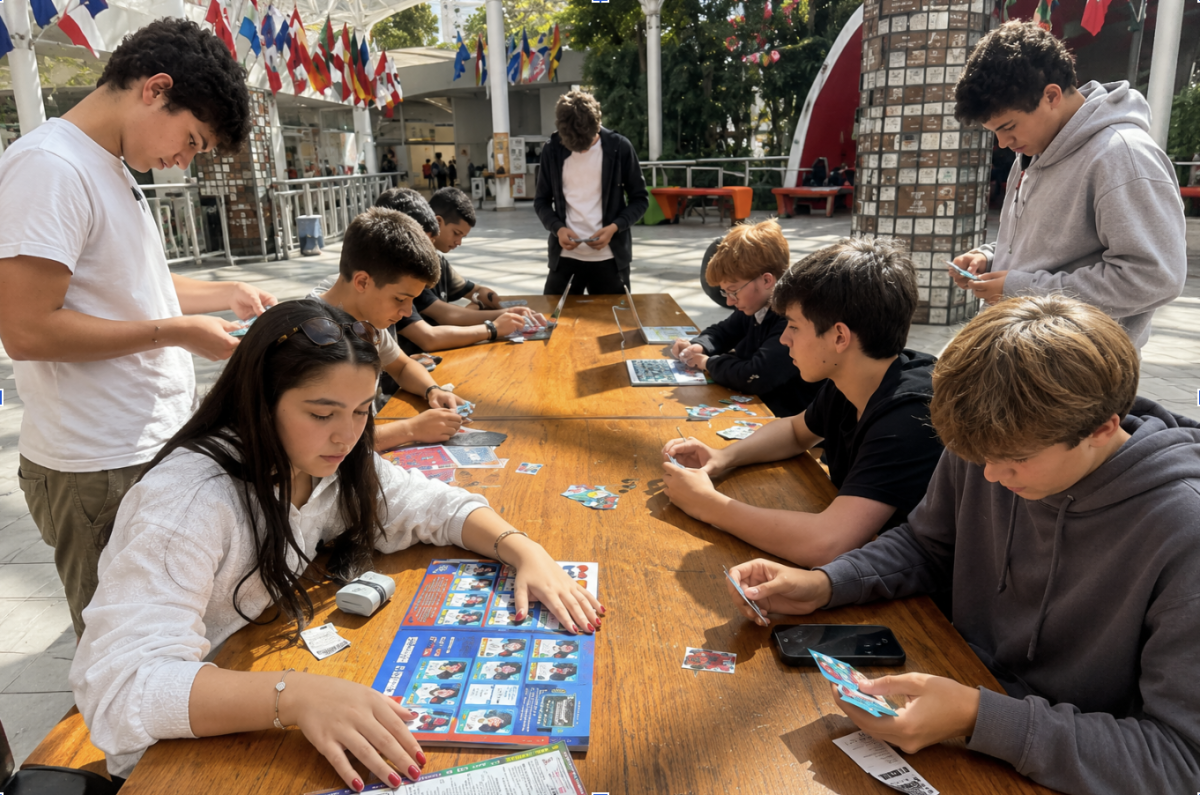
At Graded, the figurinha fever is everywhere. During recess, groups get around benches and tables with giant stacks of repeated stickers spread out in front of them. Even students who normally would not interact end up talking to each other while trying to complete their albums. However, as trading became more intense, the school introduced a new rule:
“Trading figurinhas and jogo de bafo are not allowed during instructional time or lunch time inside the tent or cafeteria from 12:05-12:40 p.m. Teachers will give a verbal warning at first. If the game continues, cards will be taken to the HS office and kept until 3:30 p.m.”
From the school’s perspective, the rule makes sense. Teachers and administrators want to protect instructional time, reduce noise and prevent trash from being left around campus. Some students have also admitted that trading can become distracting during class, especially when people are more focused on finding Neymar than on algebra.
Still, many students feel that the rule goes too far. The World Cup only happens once every four years, and for many Brazilians, collecting figurinhas is more than just a hobby. It is part of the excitement surrounding the tournament. One teacher I spoke to said she understood why the school felt the need to create restrictions, but also believed students should be able to enjoy the tradition, especially in a country where football is such a huge part of the culture. Opinions among students are divided. Some agree with the rule and think it is reasonable because trading can interrupt class and create unnecessary messes. Others believe the rule is too serious for something that is ultimately harmless and fun. Many students especially dislike the fact that stickers can be confiscated until the end of the day.
Personally, I understand why the school wants to protect learning time. I have seen how distracting figurinha trading can become during class. At the same time, completely restricting trading in popular student spaces during lunch feels too harsh. Instead of treating figurinhas like a problem, Graded could create a designated area for trading stickers. If students choose to spend part of their lunch trading instead of eating, that is their own responsibility.
In the end, this debate is about more than stickers. It reflects the challenge Graded faces when trying to balance structure and student social life. Sometimes the traditions students care about most are the ones that create community in the first place.