

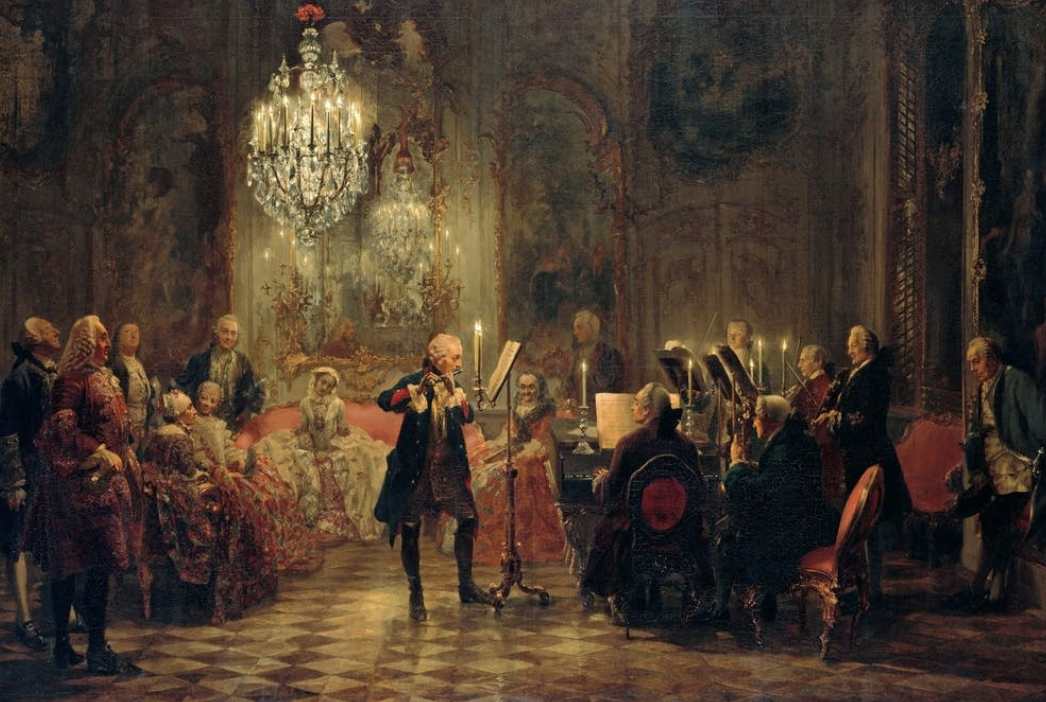
Classical music is a Western musical tradition that spans nearly a thousand years, from the Middle Ages to the present day. While many people recognize famous pieces like Für Elise or Mozart’s Requiem, fewer know the fascinating stories behind how these works were created. Some are tragic, some are mysterious, and some are surprisingly inspiring.
Mozart’s Requiem in D Minor, K. 626
In 1791, Wolfgang Amadeus Mozart received a request for a requiem mass from an anonymous stranger. The commission was surrounded by secrecy, and the payment was generous. At the time, Mozart’s health was already beginning to decline.
As he worked on the piece, Mozart reportedly became convinced that he was writing the requiem for his own funeral. Whether this was true or not, he became obsessed with completing it. In a strange coincidence, Mozart died in December 1791 before finishing the work.
After his death, his wife Constanze hired another composer to complete the unfinished sections so the family could still receive payment. The completed requiem was then delivered to the mysterious client, who likely never knew that parts of the piece had been written by someone other than Mozart.
One of the most famous movements in the requiem is the Lacrimosa, which Mozart was unable to finish before his death.
Beethoven’s Für Elise
One of the most recognizable piano pieces ever written, Für Elise was not published until 1867, forty years after Ludwig van Beethoven’s death.
The piece was discovered by musicologist Ludwig Nohl, and to this day nobody knows for certain who “Elise” really was. Many historians believe the title may have referred to Therese Malfatti, a young woman whom Beethoven proposed to around 1810.
If this theory is correct, Für Elise was essentially Beethoven’s musical love letter. Yet the piece remained hidden in a drawer for decades before being discovered and shared with the world.
Ironically, one of the most famous pieces in classical music was never intended to become famous at all. It may have simply been a private expression of affection that survived by chance.
Beethoven’s 9th Symphony
Perhaps the most remarkable story in classical music belongs to Beethoven’s 9th Symphony.
By the time he composed the work, Beethoven was almost completely deaf. Unable to hear the orchestra, he created the music entirely in his imagination. Despite this challenge, he composed what many consider one of the greatest symphonies ever written.
The symphony was also groundbreaking because it was the first major symphony to include a full chorus. Its final movement, commonly known as Ode to Joy, remains one of the most celebrated pieces of music in history and later became the anthem of the European Union.
At the premiere, Beethoven conducted alongside the orchestra. Because he could not hear the music or the audience’s reaction, he continued conducting even after the performance had ended. According to accounts from the event, someone had to turn him around so he could see the audience giving a standing ovation.
One of the greatest achievements in classical music was created by a composer who could not hear a single note of it.