
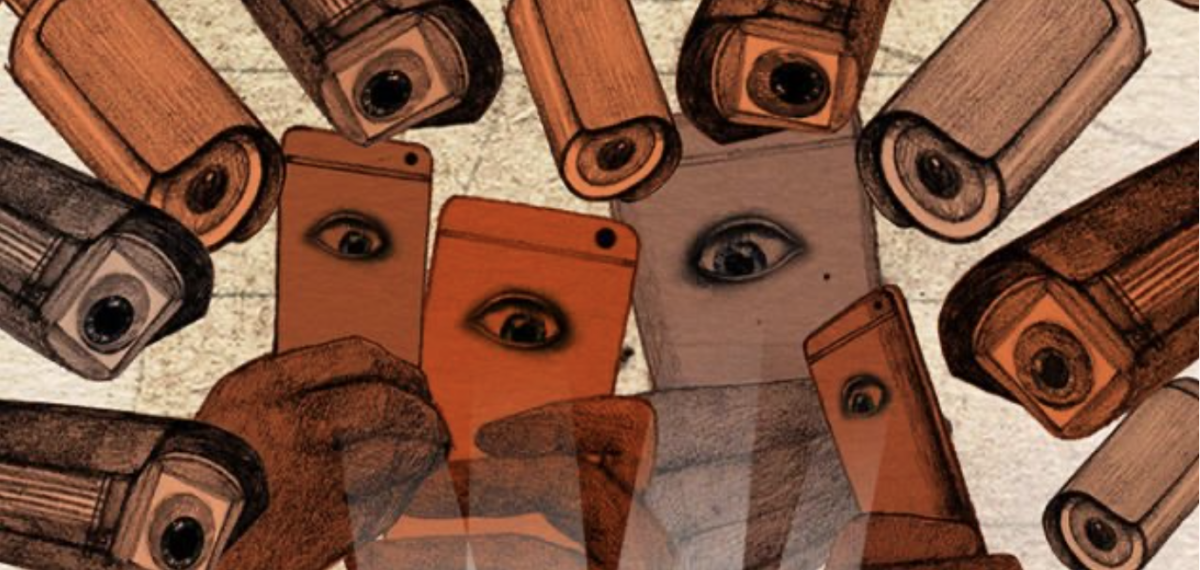
Oppression does not always announce itself through visible violence. It forms comes with neurological pathways, thrives in uninformed minds, and shapes our first instincts to serve its agenda. We criticize books like Animal Farm and 1984 as exaggerated, yet these works do nothing more than hold a mirror to our own history. Where Orwell imagined a totalitarian, hierarchical dystopia known as The Party, 2026 has produced its own intellectual adversary: one built from algorithms and the calculated indifference of information.
Books. Opinions. Ideas. Intelligence is the gateway to conversation, to doubt, to resistance. Adolf Hitler burned books to “cleanse” German culture, and in doing so, he systematically erased opposing ideologies and forced a homogenous agenda upon an entire nation. On May 10, 1933, in Berlin’s Opernplatz (now Bebelplatz), approximately 20,000 books were reduced to ash. Twelve years later, six million Jews were killed by the very consumers of that same poisonous propaganda. Across every culture, every regime, every era, history does not simply repeat; it escalates, morphing into extremism each time. Where Orwell warned against authoritarian suppression of knowledge, English writer and philosopher, Aldous Huxley, issued a different warning altogether: that society could be just as effectively controlled through pleasure, triviality, and an overwhelming flood of information.
Social media is that flood. It offers an overabundance of information while promoting propaganda dressed as free thought, elevating hollow lifestyles, and normalizing staggering inequality. In Huxley’s dystopian novel, Brave New World, ruling authorities achieve mass compliance not through force, but through an endless stream of distraction and entertainment. He understood that scientific and technological advancement could become tools of control as easily as tools of liberation. The internet promises extraordinary freedom, and yet that freedom can be revoked as swiftly as it was granted. We consume content without question, surrendering our attention and our data to algorithms engineered specifically for us. We never think to challenge what we’re fed, never reach beyond the opinions already placed in our hands. We must begin to interrogate this arrangement, because these platforms are not neutral. They are instruments of a controlling oligarchy, built to enrich those profiting from our engagement.
The most effective form of control is making the masses love their own servitude. These platforms are designed as variable reward systems, not unlike slot machines, where likes, comments, and infinite scrolling deliver unpredictable bursts of gratification, compelling us to return again and again. As Huxley feared, “the abolition of free will by methodical conditioning, […] servitude made acceptable by regular doses of chemically induced happiness” are not distant warnings; they are present conditions we have simply stopped noticing. We have become conformists. With every Trump or Biden clip we scroll past, laughing. With every video of a starving child, we skip without a second thought. Inequality and brokenness have been so thoroughly normalized that we no longer feel the urgency to resist the very systems that produce them.