

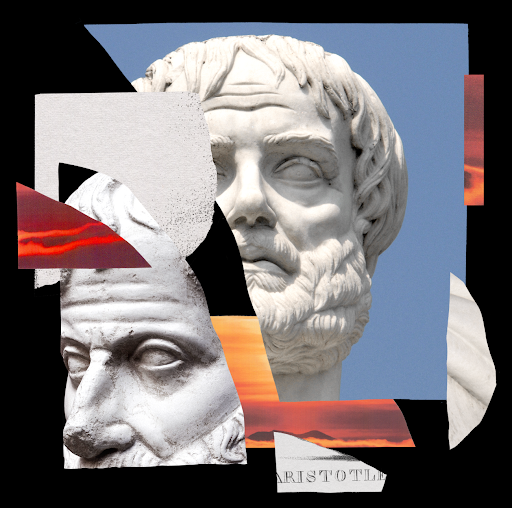
Here’s a challenge for you: open up a random Wikipedia page and click the first link that you see. Then, in the next page, click the first link you see there, and repeat the process. I guarantee that you will eventually land on the Wikipedia page for philosophy. This isn’t just some weird coincidence: philosophy is in everything. Because of this, educating yourself on philosophy can fundamentally change or at least seriously challenge your entire worldview.
Take Immanuel Kant, a German philosopher who is the author of A Critique of Pure Reason and Groundwork of the Metaphysics of Morals. These titles may sound intimidating, but the ideas proposed in these books are quite simple. One of the most famous concepts from the latter title is the categorical imperative. It essentially asks, “If everyone did what I was about to do, would it still be okay?” With this in mind, decisions that previously appeared inconsequential, like cheating on homework or lying to your parents, suddenly carry a whole new weight. This shows that philosophy isn’t something only practiced by Athenians in togas, but in fact something that is still around and more necessary than ever.
Another famous German philosopher is the often-misunderstood Friedrich Nietzsche. Nietzsche was a harsh critic of what he called “herd morality,” which is first mentioned in Beyond Good and Evil. He compared those who thought with the group because it was easier than forming original opinions to herd animals like cows, lacking any agency or individual will. When you make fun of people who dislike a popular movie or like pineapple on pizza, you are only strengthening this herd mentality. If Nietzsche were alive today, he would most certainly despise social media for exacerbating herd morality and creating echo chambers. Social media is essentially the full industrialization of herd morality: it rewards agreement, punishes dissent with cancel culture, and encourages mindless trends. Additionally, algorithms create echo chambers, which filter content to show you what you already agree with, create ideological tribes, and discourage nuanced or independent thought.
This herd dynamic shows up not only online, but in our academic lives as well. Recently, my English class went to the library to learn how to select enjoyable books. The librarian asked us to raise our hands if we read for pleasure frequently. Out of my entire class of 20+ people, only the English teacher and myself raised our hands. Several friends of mine reported similar experiences. Furthermore, many of my peers that do read for pleasure gravitate toward lighter, comfort-genre fiction, which is perfectly enjoyable, but doesn’t stretch them intellectually the way philosophy does.
I remember distinctly when we first read Plato’s cave allegory in 7th grade. Even though it wasn’t the primary focus (in fact, it was merely meant to teach us what an allegory is), I wanted more. I explored philosophy further, and I learned that it can also show up in unexpected places. For example, Dostoyevsky’s Crime and Punishment, which I am reading currently, features in-depth discussions about nihilism, utilitarianism, and the separation of people into “ordinary” and “extraordinary,” even though it’s entirely fictional. Philosophy can take many different forms.
After reading this article, I encourage you to read The Problems of Philosophy by Bertrand Russell. It’s specifically designed for newcomers to philosophy and surprisingly digestible. After this, you can work your way up, and make sure to always challenge yourself with the things you read. Because of the ubiquity of philosophy, reading even just a little bit of it can make you see and process information in an entirely different way from before.
Image: Getty Images