
Most students believe that learning only happens inside classrooms, through lessons, textbooks, and exams. Grades often become the main measure of success. However, some of the most valuable lessons in life are learned outside of school, especially through volunteering.
When students volunteer, they are exposed to people and situations different from their own. They may help younger children, support families who are struggling, or work on community projects. Through these experiences, students develop empathy. They begin to understand that everyone faces challenges, even if they are not always visible. Volunteering teaches students to listen, to care, and to see the world from another person’s perspective. Unlike academic subjects, empathy cannot be memorized or tested. It is learned through real human connection.
Volunteering also teaches responsibility in a powerful way. In school, forgetting homework may result in a lower grade, but life continues as usual. In volunteering, people depend on you. If a student does not show up, someone may not receive the help they need. If they are unprepared, an activity may fail. This helps students realize that their actions affect others. Furthermore, it teaches them the importance of being reliable, organized, and committed.
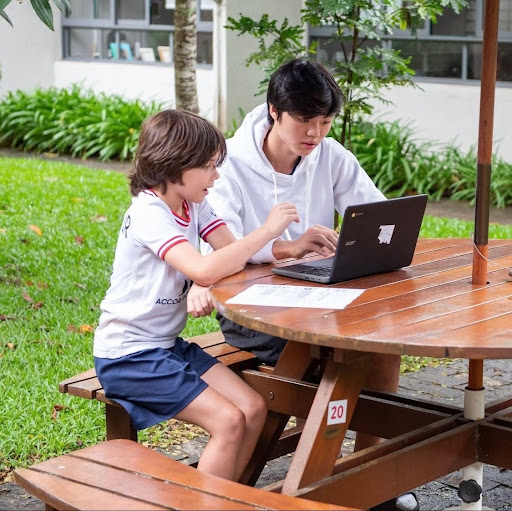
Through my own volunteering experience, I learned these lessons firsthand. Working with younger students showed me how important patience and consistency are. Knowing that others were relying on me motivated me to be more responsible and prepared. It also helped me understand different realities and appreciate opportunities I often took for granted. This experience made me more confident and aware of my role in helping others.
Another valuable lesson volunteering teaches is confidence. Many students feel nervous speaking in class or sharing their ideas. When volunteering, they are encouraged to step outside their comfort zones. They may need to lead activities, talk to strangers, or solve unexpected problems. At first, these situations may feel uncomfortable. Over time, however, students become more confident. They learn to trust themselves and recognize that they are capable of making a positive impact.
In addition, volunteering improves teamwork skills. While group projects at school sometimes feel unbalanced, volunteering requires real cooperation. Everyone has an important role, and success depends on working together. Students learn how to communicate clearly, respect different opinions, and support one another. These skills are essential for future careers and leadership roles.
Finally, volunteering gives students a sense of purpose. School life can often feel stressful, with pressure to earn high grades and prepare for college. Volunteering reminds students that learning is not only about personal achievement. It is also about helping others and contributing to society. It shows students that their knowledge and abilities can be used to create positive change.
In conclusion, while school teaches important academic skills, volunteering teaches life lessons that cannot be found in textbooks. It builds empathy, responsibility, confidence, teamwork, and purpose. These lessons prepare students not only for exams, but also for real life. Volunteering proves that true learning happens when students use their skills to make a real difference in the world.
Image: Graded website