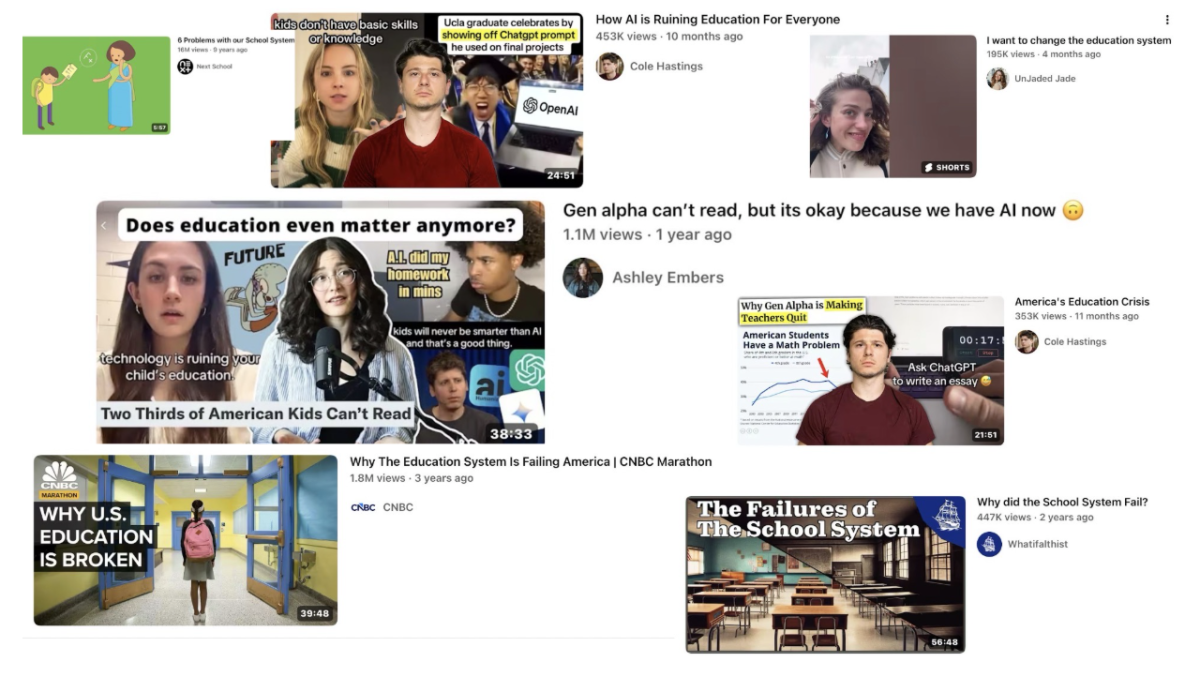

I’m frightened by how the machine doesn’t panic. You hand it an extract, it reads the thing once, maybe twice, and within minutes there’s a thesis, balanced and arguable. It instantly identifies the consecutive oxymorons building a nervous syntax in the passage, and explains them in vocabulary so meticulous it’s almost indecipherable to a normal person. Then, without being asked, it ties the extract to some larger theme in today’s society.
The machine is very good at this, because the machine has studied what the grader wants.
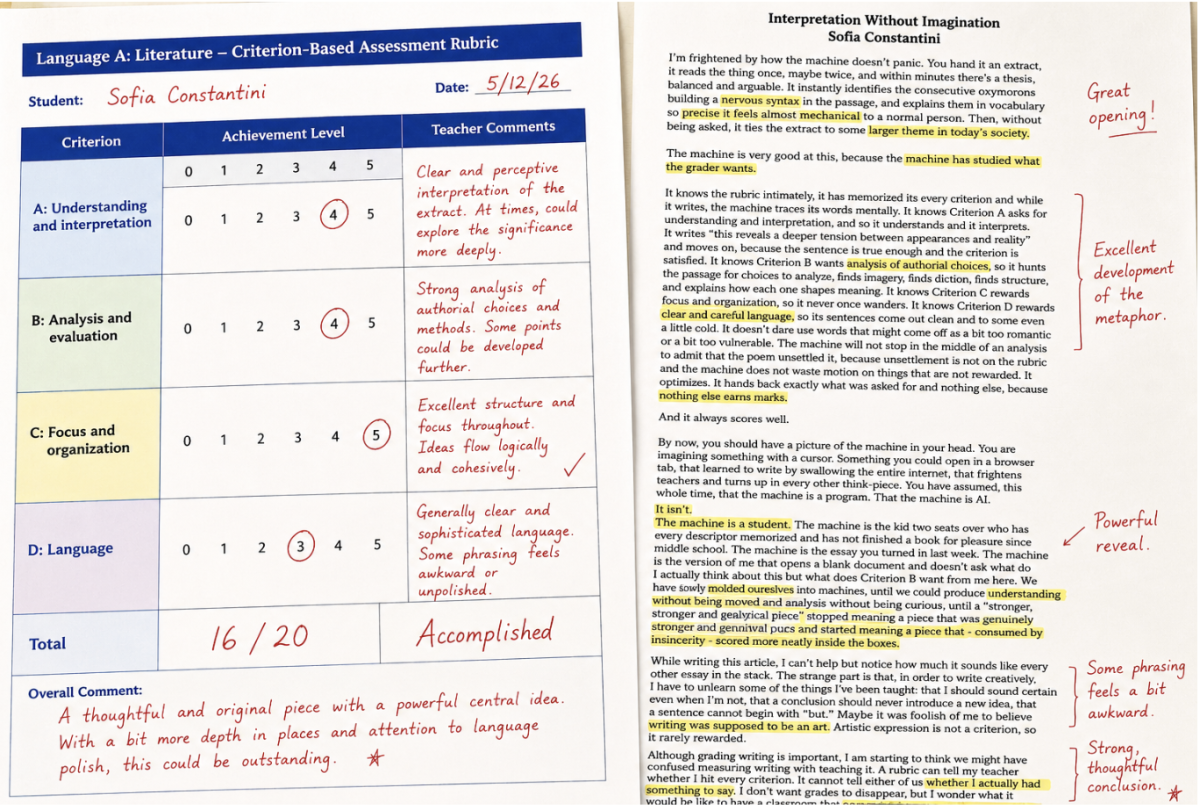
It knows the rubric intimately, it has memorized its every criterion and while it writes, the machine traces its words mentally. It knows Criterion A asks for understanding and interpretation, and so it understands and it interprets. It writes “this reveals a deeper tension between appearances and reality” and moves on, because the sentence is true enough and the criterion is satisfied. It knows Criterion B wants analysis of authorial choices, so it hunts the passage for choices to analyze, finds imagery, finds diction, finds structure, and explains how each one shapes meaning. It knows Criterion C rewards focus and organization, so it never once wanders. It knows Criterion D rewards clear and careful language, so its sentences come out clean and to some even a little cold. It doesn’t dare use words that might come off as a bit too romantic or a bit too vulnerable. The machine will not stop in the middle of an analysis to admit that the poem unsettled it, because unsettlement is not on the rubric and the machine does not waste motion on things that are not rewarded. It optimizes. It hands back exactly what was asked for and nothing else, because nothing else earns marks.
And it always scores well.
By now, you should have a picture of the machine in your head. You are imagining something with a cursor. Something you could open in a browser tab, that learned to write by swallowing the entire internet, that frightens teachers and turns up in every other think-piece. You have assumed, this whole time, that the machine is an AI program.
It isn’t.
The machine is a student. The machine is the kid two seats over who has every descriptor memorized and has not finished a book for pleasure since middle school. The machine is the essay you turned in last week. The machine is the version of me that opens a blank document and doesn’t ask what do I actually think about this but what does Criterion B want from me here. We have molded into machines, slowly, until we could produce understanding without being moved and analysis without being curious, until a “stronger, more unique analytical piece” stopped meaning a piece that was genuinely stronger and genuinely ours and started meaning a piece that – consumed by insincerity – scored more neatly inside the boxes.
While writing this article, I can’t help but notice how much it sounds like every other essay in the stack. The strange part is that, for the sake of creativity, I will be forced to unlearn the things I’ve been taught: that I should sound certain even when I’m not, that a conclusion should never introduce a new idea, that a sentence cannot begin with “but.” But I guess it was foolish of me to believe that writing was supposed to be an art. Artistic expression is not a criterion, so it is not worth spending much time on.
Although grading writing is important, I am starting to think we might have confused measuring writing with teaching it. A rubric can tell my teacher whether I hit every criterion. It cannot tell either of us whether I actually had something to say. I don’t want grades to disappear, but wonder what it would be like to have a classroom that can grade the essay without grading the art out of me.