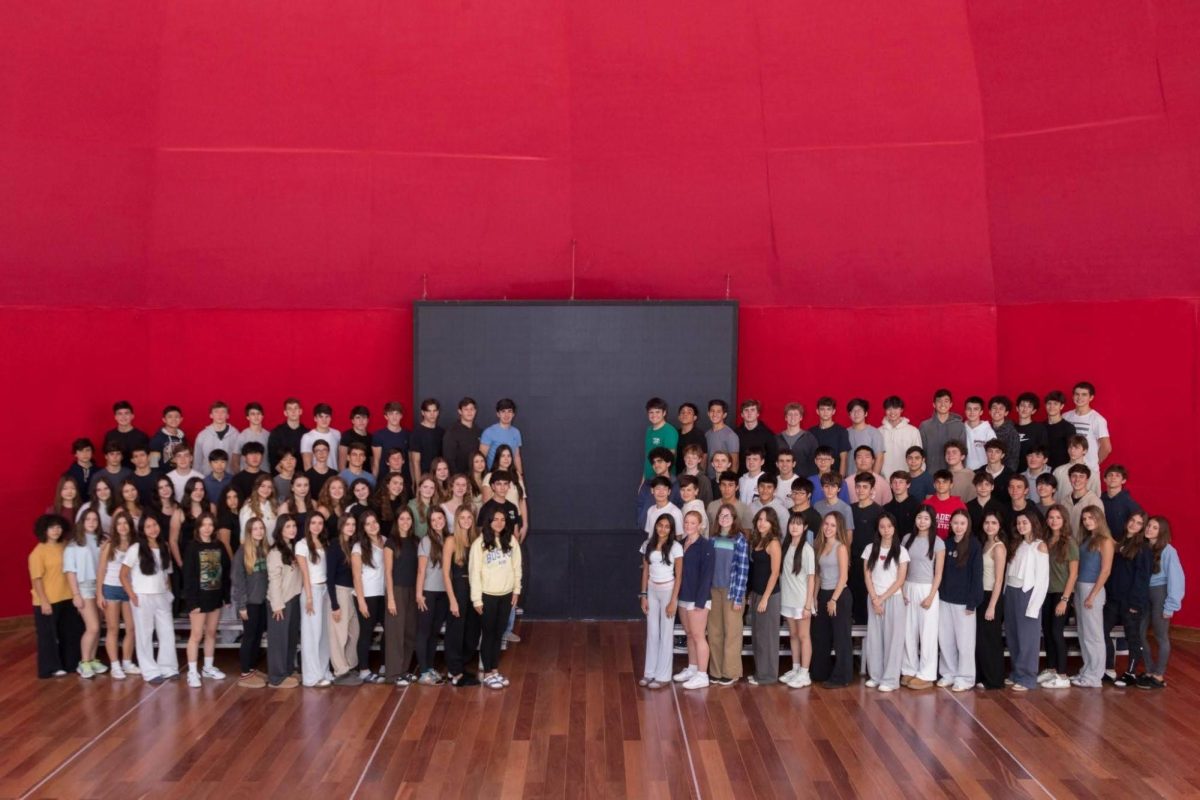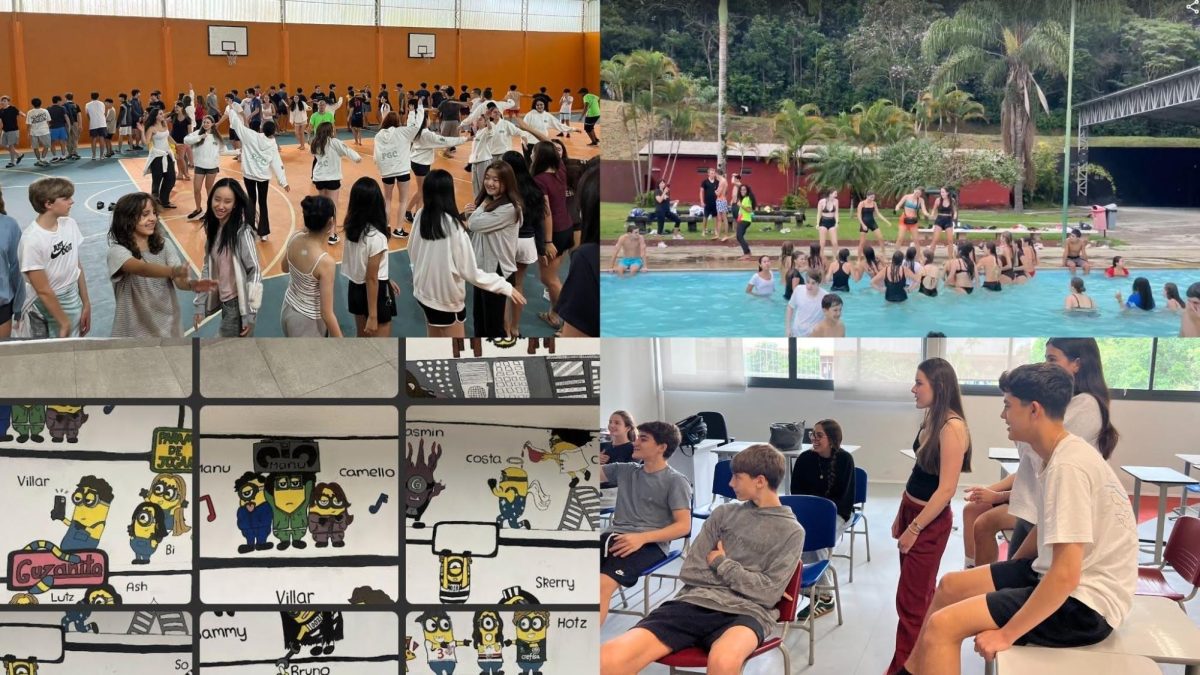

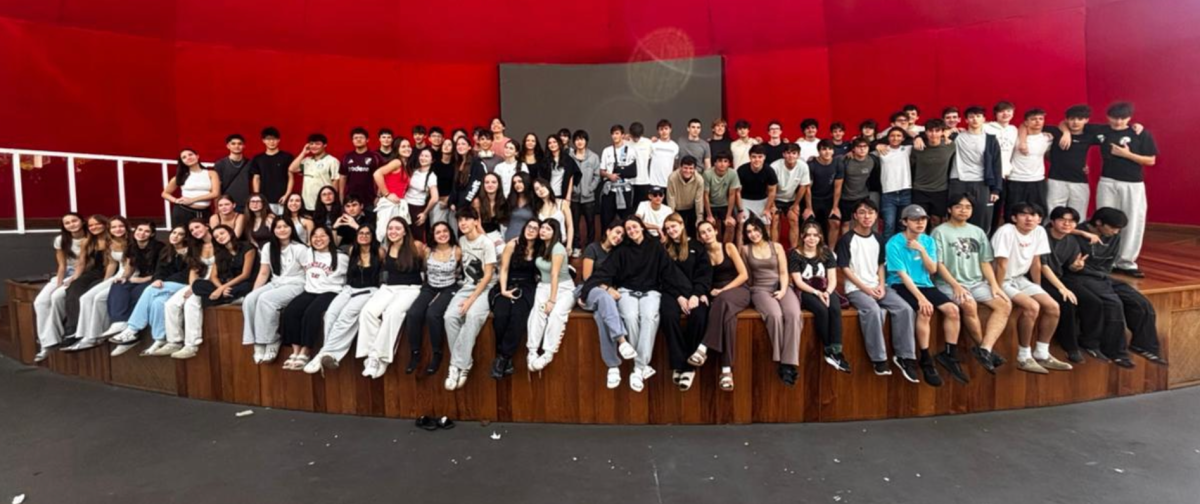
For individuals who spend every day together, we are remarkably convinced that we are entirely different from one another. I mean, it really is no secret that we are experts in threading ourselves into distinct circles and defaulting to them. It’s also no secret that it’s far easier to dwell in these differences than to accept commonalities that disrupt our preconceived notion of others.
This shared acknowledgement of our inability to connect with one another is exactly what made it so compelling to see how easily separation could blur when we were given the chance to merely talk.
A few weeks back, I received an invitation to a “focus group” with Ellen Mahoney, a visiting consultant from Sea Change who works with schools on Social and Emotional Learning (SEL). I remember being completely thrown off by the list of those invited: it truly felt like the most randomly curated selection of students they could have conjured, and, candidly, I was unconvinced that an intriguing conversation could actually spark from it.
We sat in a circle, a group of perpetual strangers, in the same grade, and it seemed that almost immediately this narrative of our irreconcilable differences began to fade.
Isolating ourselves socially to attempt to excel academically under the crushing pressure of Junior year? A shared reality. The agony of feeling as though our time is being wasted by those around us when time is the most precious thing at our disposal? The same exasperation. All of us, burdened by exhausting expectations to constantly produce and guilt that lingers when we just want to be.
Everything said in that room was a mirror reflecting my own experiences back at me, only through the vessel of classmates I thought I had nothing in common with. So why do these artificial social barriers persist? Why don’t I know the people who I can relate to most?
It feels like this estrangement is a limiting factor that turns our academic experiences into something far worse. Our mutual isolation leads us to lose the leverage to change our environment in order to be able to alleviate our shared distress. It feels like we can’t even come together to manage minor frustrations like the restriction of using NumWorks calculators on our economics EoLs, or the relentless pile-up of assessments that always fall in that same week.
But knowing how harmful this isolation is begs a bigger question: why do we let it persist? Why do we treat the transition into our Senior year as the only magic cure for this broken dynamic? If nothing else seems to unite us, it makes you wonder if these barriers are so systematically ingrained in our school system that they’re genuinely unfixable, that we will never all know each other in a way that we should.
Still, it makes you wonder that if a single, randomly curated focus group could dismantle years of assumed differences in less than an hour, then maybe our compliance is where the problem lies as opposed to the ‘system’ itself.