

In February of 2026, the main conflict surrounding Iran were the protests: rising prices, economic frustration, and the government’s crackdown on people taking to the streets. Yet, as of March 2026, the situation has now expanded far beyond a domestic protest movement. Iran is not only facing unrest at home. It is also at the center of a growing military and political conflict, one that affects international trade, regional security, and even the global economy.
Part of the reason the early protests became so significant was that they were driven by everyday problems people could actually feel. Inflation, the collapse of the rial, and the rising cost of food, medicine, and other goods placed enormous pressure on ordinary Iranian families. The broader conflict stemmed from financial pressures (refer to my article “Iran’s Winter Protests” for more detail), as well as political anger and government repression. Thus, the situation we examine today is the product of an already unstable country under pressure, currently struggling for legitimacy in the eyes of many of its own people.
Now, however, the story is no longer only about protests in the streets. It is also about military strikes, regional escalation, and the risk of a much broader confrontation. Recent attacks involving Iran, Israel, and the United States have pushed the crisis into a conflict that could destabilize the region even further.
One of the most important reasons this matters internationally is the Strait of Hormuz. This narrow waterway, located between Iran and Oman, is one of the world’s most important shipping routes. A large share of global oil and liquefied natural gas shipments passes through it. When conflict intensifies near Iran, the danger is not limited to missile strikes or military headlines. It can also disrupt the movement of energy supplies that many countries depend on. In recent days, shipping through the Strait of Hormuz has slowed dramatically, vessels have faced greater risks, and the cost of insuring ships in the region has surged.
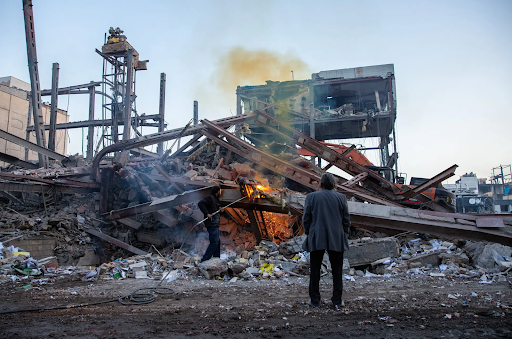
For high school students, this may sound distant at first. But it is a clear example of how global events connect to everyday life. When a major trade route becomes unstable, energy prices can rise. When energy prices rise, transportation and production costs often rise as well. That can contribute to inflation in other countries, making daily life more expensive even for people far from the original conflict. In other words, a conflict in Iran does not stay only in Iran. It can affect fuel, shipping, food prices, and the broader global economy.
Another reason students should care is that Iran’s crisis shows how quickly different issues can merge together. In class, topics like economics, human rights, war, politics, and globalization are often discussed separately. But in real life, they overlap. Iran is a perfect example. The crisis began with economic pressure and public anger. It involved censorship and internet restrictions. It developed into a story about state violence and repression. And now it has become tied to military escalation and international trade. That makes Iran’s conflict more than just another world news headline. It is an example of how one national crisis can spill over into regional and global ones.
There is also a more direct lesson here for young people as readers. News about conflict may occasionally seem remote because it occurs far away and involves governments, militaries, and diplomatic language that seem disconnected from student life. But high school students are not too young to understand why these events matter. Students already live in a world shaped by inflation, debates over social media censorship, migration, war, and partisan polarization. Iran brings many of those issues together in one case. Following it is not only about knowing what happened in one country. It is with respect to understanding how fragile states respond under pressure, how conflicts spread, and how ordinary people often suffer first.
That is why Iran’s crisis should be seen as more than an extension of the protests I wrote about earlier. The protests were the beginning of the story, not its end. What began as anger over rising prices and government failure has grown into something much larger: a crisis of political legitimacy, a military confrontation, and rising pressure on one of the world’s most important trade routes. For students, that makes this conflict worth paying attention to not just as breaking news, but as a real example of how economics, war, and politics can collide in ways that shape the wider world.
Sources:
“Iran: Internet Shutdown Hides Violations in Escalating Protests.” Amnesty International, Jan. 2026.
“Maritime Insurance Premiums Surge as Iran Conflict Widens.” Reuters, 6 Mar. 2026. https://www.reuters.com/world/middle-east/maritime-insurance-premiums-surge-iran-conflict-widens-2026-03-06
“Rights Groups Say at Least 25 Dead in Iran Protests.” Reuters, 6 Jan. 2026.
“See Tanker Traffic in Strait of Hormuz Come to Standstill.” Reuters, 5 Mar. 2026. https://www.reuters.com/world/middle-east/see-tanker-traffic-strait-hormuz-come-standstill-2026-03-05/
“Statement by the Independent International Fact-Finding Mission on the Islamic Republic of Iran.” Office of the United Nations High Commissioner for Human Rights (OHCHR), Mar. 2026. https://www.ohchr.org/en/statements-and-speeches/2026/03/statement-independent-international-fact-finding-mission-islamic
Images: New York Times