
I was barely eight years old when I mindlessly walked under the Bell, using it as a shortcut to get to recess. My friends were horrified, not because I’d done something dangerous, but because I’d done something I hadn’t yet earned. Passing beneath the Bell was a senior’s privilege, a rite saved for the very end. To walk under it was to say goodbye to Graded, and I was only in the second grade. The Bell held a sacred power: the power of closure, of goodbyes that had to be earned rather than given.
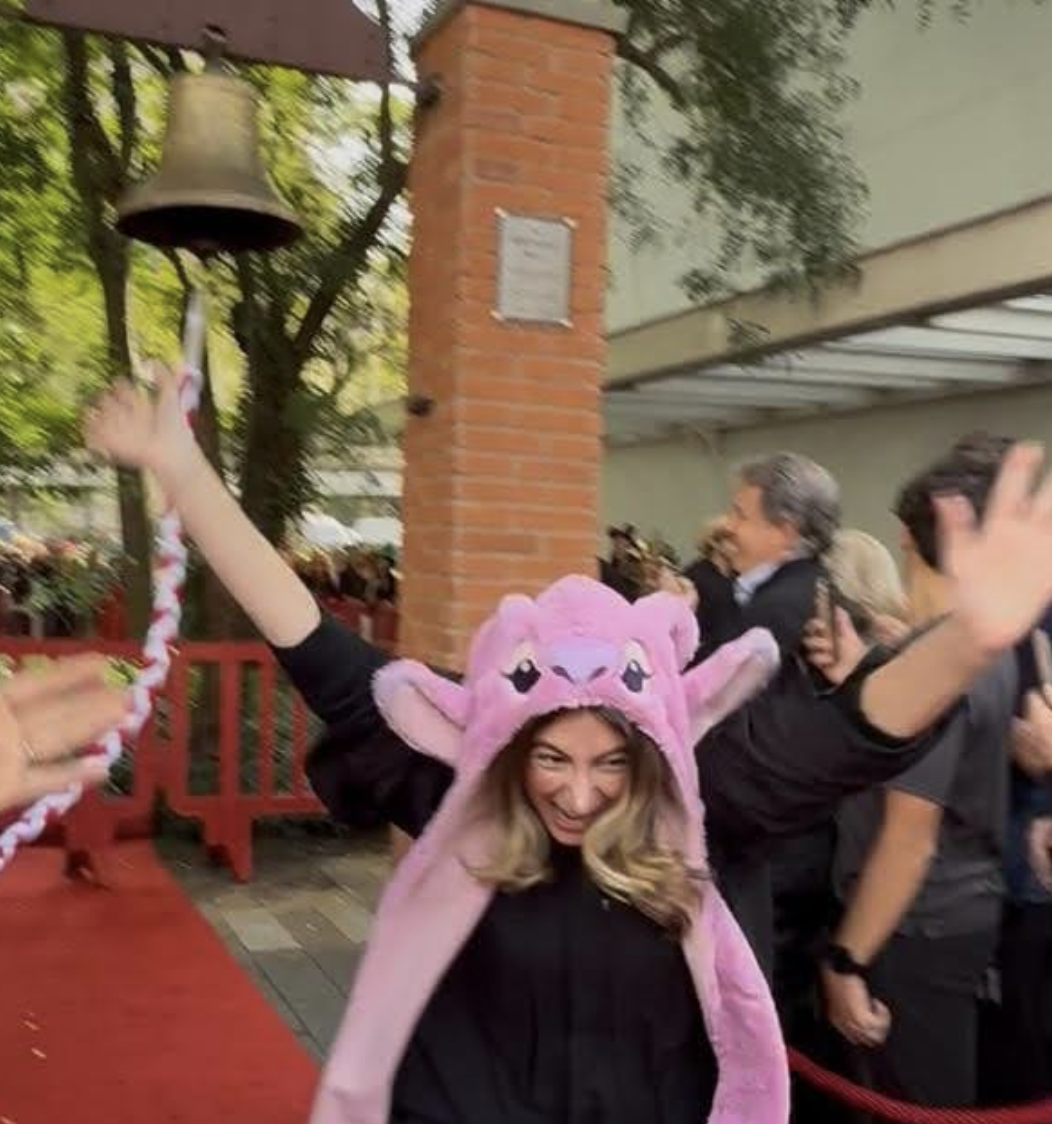
The Bell Ceremony is one of Graded’s oldest graduation traditions. It began in 1995, when the Bell was gifted to Graded by alumni on the school’s 75th anniversary. On the last day of senior week, the day before their formal graduation, the Class of 2026 gathered at the Bell wearing their wildly decorated hats. One by one, each senior stepped up and rang it, marking the official end of their time at the school.
Perhaps the symbolism it holds is why the Bell Ceremony has become the most emotional event of graduation for me. When my sister graduated, my parents camped out by the Bell to claim the best view, and I was lucky enough to witness the ceremony up close. It was a moment thick with nostalgia, bittersweet in the way only earned goodbyes can be. This year was no different. To say goodbye to an entire class of seniors is hard, but to watch them close the Graded chapter of their lives by ringing the Bell is a privilege. Some rang it hard, grinning. Others held the rope a moment before pulling, like they weren’t ready. But no matter how they chose to make it final, they earned it.
One goodbye especially stirred me: Ana Claudia G.’s. She rang the Bell, euphoric, jumped for joy, then turned and raced back into her mother’s arms. There was no sadness lingering, no reluctance. Where others had hesitated on the rope, she rang it like a celebration. Her goodbye wasn’t a loss to mourn but a finish line to cross. In watching her run to her family, I thought of my family at the Bell a year before, waiting for my sister. I understood it then: I wasn’t really watching strangers say goodbye. I was watching families finish something they’d started together.
So while Ana Claudia ran toward joy, the crowd held two feelings at once and the seniors at the rope split between those who couldn’t wait and those who weren’t ready. No two people left the same way. And yet they were all leaving the same thing, at the same moment, by the same Bell. That was the part I kept turning over afterward: how one rope could mean a celebration to one person and an ache to another, and still be earned by every one of them.
What does it mean to earn a goodbye? What makes ringing the Bell an honor? Here’s what I’ve concluded: a goodbye is earned the same way anything is: by the years of small, dissonant days that pile up behind it. The Bell doesn’t ring because of a single moment. It rings for every ordinary morning a senior showed up, every test, every recess, every shortcut not taken. That’s why my eight-year-old self got it so wrong. I thought the Bell was a thing you could simply walk under. But you can’t skip to the end of something you haven’t lived yet. The honor isn’t in the ringing, it’s in everything that earned you the right to.