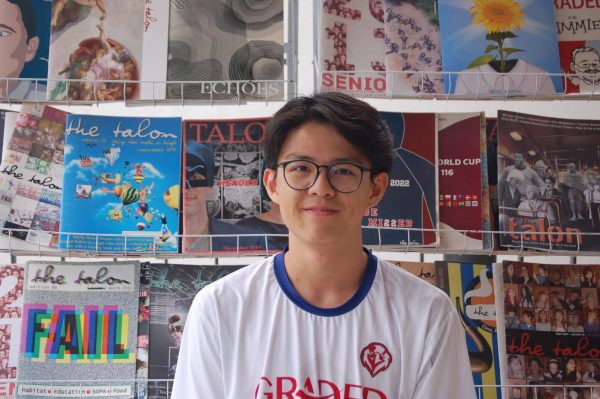

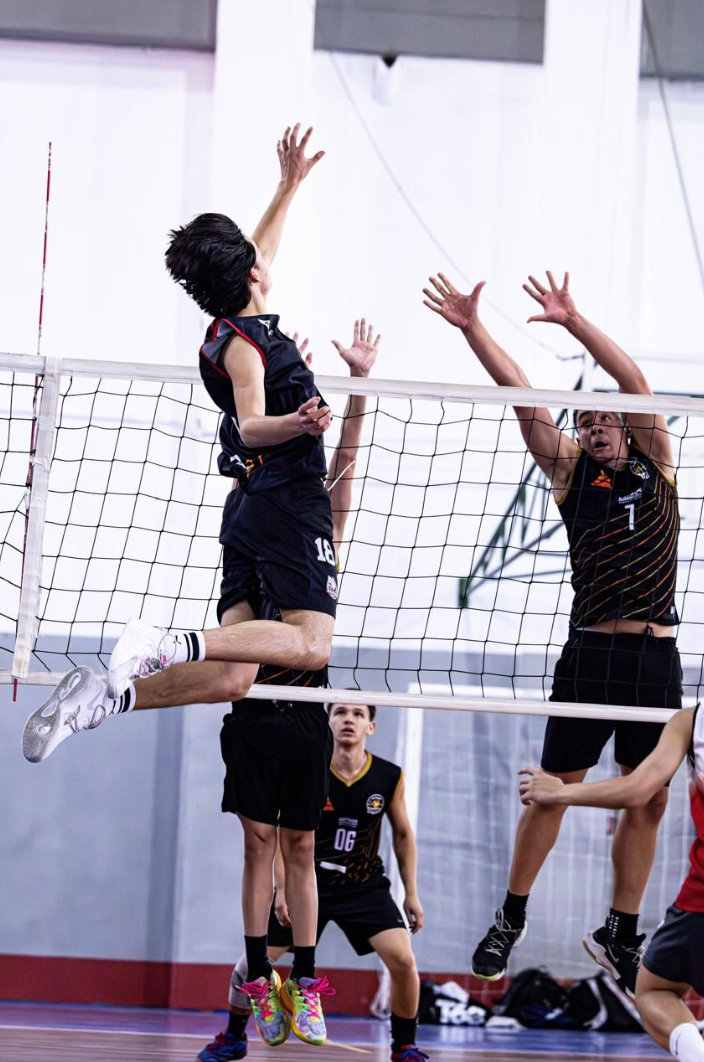
Elite sports demand far more than talent. Behind every match are long hours of training, difficult schedules, and constant pressure to improve. To better understand what life is like for a high-level club athlete, Victor Yi spoke with Gabriel Trotter about his experience playing elite volleyball, balancing academics and athletics, and the challenges that come with competing at such a demanding level.
Where do you currently practice volleyball, and what does your training schedule look like?
I play for São Caetano. We usually train five days a week for over two hours. If we’ve had an exhausting week of back-to-back games, we might get Wednesdays off to recover. Tuesdays can be tricky, sometimes practice gets bumped to 3:00 PM while I’m still at school. Since making it to São Caetano on time is impossible, I stay on campus and practice with the Graded varsity team instead. It’s a chaotic juggle, but it keeps me on the court!
Since São Caetano is really far, how do you balance academics, social life, and volleyball?
It takes extreme discipline. A typical practice day involves a three-hour round-trip commute, taking two Ubers and two trains, just for a two-hour session. I leave school at 3:30 PM and don’t get home until 8:30 PM. I’ve learned to maximize my time, like squeezing in 40 minutes of studying on the busy train. After dinner, I have a strict two-hour window for homework before bed. While most students relax on weekends, I use Saturday and Sunday to catch up on schoolwork. It’s exhausting, but totally worth it.
What challenges come with competing at such a high club level?
It’s just as demanding mentally as it is physically. The schedule changes constantly, sometimes a 5:00 PM practice gets bumped to 3:00 PM at the last minute, forcing me to rearrange my whole day. The language barrier is another huge hurdle. Instructions are in Portuguese, so I occasionally misunderstand drills and catch heat from the coaches. Socializing is tough too; translating everything in my head takes a lot of mental energy, making basic conversations feel like a workout.
What does a typical day look like for you during the season?
Game days usually fall on weekends, but Friday nights are the most intense. If we play at 7:30 PM, I race right from school into a 90-minute commute. We arrive an hour and a half early, which is actually great, it gives us time to joke around and bond. After that, we lock in: watching film, discussing tactics, and going through a serious warmup so we’re ready for the first serve.
São Caetano has a very different sports culture from Graded. What was the hardest part to adapt to? How about the language?
It was a huge culture shock. At Graded, sports are a casual, fun pastime. At São Caetano, volleyball is everyone’s top priority. The hardest part was adapting to that elite, hyper-focused mindset every single day. I rely heavily on music and motivational videos to get in the zone. I also had to build mental toughness. When I make a mistake, I have to let it go immediately. If I bring a bad practice home with me, I won’t have the energy to finish my homework. On top of that, navigating this intense environment in Portuguese is exhausting. Missing a quick cue can ruin a drill, and translating my thoughts before socializing makes building friendships double the work.
Who are some athletes or people who inspire you?
My inspiration comes from a really diverse mix of people, and characters, that help me balance the pressure of high-level sports.
On the competitive side, I’ve always looked up to Kobe Bryant. His ‘Mamba Mentality’ is exactly what I try to channel on the court. His philosophy was all about relentless discipline and immediately locking in on the next play without letting mistakes break your focus. For keeping things in perspective, I look to Tyler Toney from Dude Perfect. He’s someone who executes things at an incredibly high level but always maintains a fun, high-energy, and lighthearted attitude while doing it. That’s the exact kind of energy I try to force myself into before a tough practice.
Then, honestly, I get a lot of tactical and mental inspiration from gaming. I look at the Builder from Clash of Clans and the Dart Monkey from Bloons TD 6. No matter how chaotic things get, how many ‘bloons’ are on the screen, or how many times a base gets destroyed, they just show up every single day, put their heads down, and get to work. That’s the kind of consistency you need when you’re balancing sports and heavy schoolwork.
What advice would you give to students trying to choose between school sports and club sports?
Be honest about what you want. If you’re looking for a fun, social way to stay active that fits easily around your classes, stick to school sports. But if you choose club sports, be ready to make it your top priority. You need the internal drive to put in extra hours when no one is watching. Expect spontaneous schedules, language barriers, and intense coaching. Start building your mental discipline now, learn how to hype yourself up when you’re tired, and figure out how to leave your mistakes on the court so you can still tackle your homework. It’s a massive commitment, but the growth is absolutely worth it.
Do you hope to play in college or professionally in the future?
I definitely plan to play in college. While I might not pursue a top-tier professional career after that, volleyball will always be a major part of my life as a daily hobby. The discipline, the drive to practice alone, and the mental toughness I’m building right now are tools I’ll use for the rest of my life, both on and off the court.
What’s something people don’t realize about the pressure of playing club volleyball?
The biggest hidden pressure is fighting for a starting spot, especially when you need highlight footage for college recruitment. When you aren’t guaranteed game time, every single minute of practice becomes a high-stakes audition. There’s also social pressure. People at school know I play for an elite club, but they don’t see the daily grind of battling for playtime. Plus, there’s a heavy expectation that I’ll automatically dominate when I play for the school team, even though adjusting back to the high school competitive level has its own unique challenges.
How has playing for São Caetano changed you as a player and as a person?
It completely pushed me out of my comfort zone. I’ve never been naturally outgoing, so navigating a new team with a language barrier was incredibly daunting. Having to carefully translate every thought before speaking took massive effort. But pushing past that discomfort was completely worth it. My teammates are amazing, and I quickly realized that building friendships off the court translated directly to better chemistry during games. Balancing practices, hours of homework, and a totally new cultural environment has made me far more independent and resilient. I’m no longer afraid of stepping into the unknown.