
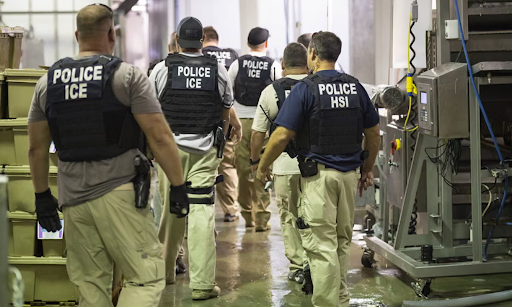
In the new US administration, urgent issues have been arising; federal immigration enforcement actions have left traumatic marks on Latino communities across the country and the globe. Arrests of people with no such criminal record have occurred without warning in many regions, and families and advocates are describing the feeling of tension in real lives that are being played with.
All across the United States, from Miami to San Diego, local immigrant support groups are reporting an increase in mass arrests that reach far beyond people with criminal convictions. According to Angelus News, only about 14% of the people who were arrested have violent criminal records, which means that many arrests are based solely on immigration status rather than serious offenses. These aren’t just numbers. They are hard-working humans: bus drivers, farmworkers, childcare providers, fathers, and mothers suddenly taken into custody without warning. People are saying ICE’s focus has shifted toward making high arrest totals, rather than enforcing specific criminal cases.
Some see this as an irrational way of thought; however, for Latino families, it’s in the way you plan your morning before school drop-off or decide whether to show up at a communal gathering down the street. This isn’t just “immigration enforcement”; it is your neighbor, your cousin, or your cousin’s roommate who might not be home when you come back from school.
That sort of anxiety has dominated moments of violence that made international headlines, especially in Minneapolis. In January, the Federal Immigration Enforcement Initiative turned deadly. In two different incidents, federal agents shot and murdered local American residents in broad daylight. One was a mother who lived in the area for a long time. Renee Good was shot inside her vehicle near her home, and the other was a man who died after an encounter with ICE on a city street. These unfair shootings made possible through power abuse left the community outraged, with protests and even the mayor, Jacob Frey, demanding answers.
In the same Minneapolis deployment, ICE detained children alongside their parents. One well-known case involved a 5-year-old, Liam Conejo Ramos, taken from the sidewalk on his walk home from school with his father. Moments like that spread across the internet, causing revolting comments towards the new administration. It also rippled through the Latino community because they pushed these issues into day-to-day life rather than just distant policy debates.
Even stories that first made national news last year still echo today because they show how inconsistent the system feels to those tied up in it. In March 2025, Canadian actress and entrepreneur Jasmine Mooney, a woman with no criminal record whatsoever, was held for 12 days by ICE after attempting to renew her work visa at the southern border. She says she had no information, and everything was extremely unclear about what would happen next. Fear was consuming her, uncertainty, and most of all revolt. When released, she returned home and spoke to The New York Times about the experience. She describes the experience as “deeply disorienting and traumatic,” where she compares the conditions in the detention to something she never expected to experience.
Behind every number, there’s a family thinking, how to pay rent without one parent’s home, how to comfort a frightened child, and how to continue a life that feels uncertain. These are the realities communities are living with now, what ICE enforcement looks like, not as a policy issue on a page, but something people wake up to every day.
Image: The Guardian