
What is not commonly thought about is what drives someone to take action as opposed to looking away. People don’t understand the tendency to help strangers when being “busy” is commonly used as an excuse. Abundance is defined by one’s own fulfillment in life, and what a person thinks they have. It is what drives people to make decisions about whether they want to help others. When you feel that you have enough abundance, you are more open to reflecting on the circumstances of others, being more keen to look at situations you were previously ignorant about. And so, contributing to society as a whole reveals something about ourselves. It reveals that everyone has a story of their own, whether participating in an organization is to support their business mindset or for personal reasons.
Growing up, we are taught to believe that helping is instinctive, yet the reason we help others is much more complicated. In some ways, whether we choose to assist those around us is correlated to our past and the things we value. My journey to Brazil opened me to a new environment, a new education, and a shift in what I considered valuable. Traveling around Brazil, I was exposed to different schools and their varying infrastructures. But what was most fascinating was seeing the diversity in the schools’ infrastructure and, most importantly, whether education is an assumption or a privilege.
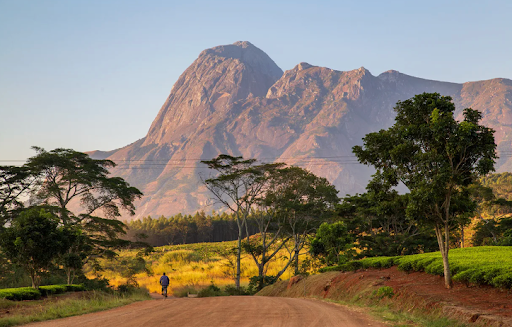
Moving abroad from my home country for the first time encouraged me to look directly at a privilege I was too “distracted about my life” to pause and notice. Where I stand now, assuming it had always been normal, the privilege of learning in a working system reinforced my understanding that enough is plenty. When I got an invitation to build a school in Malawi, Africa, it caught me reflecting on the reason why I wanted to join: I wanted to experience what it truly feels and looks like to build a school from zero, as someone who has never had to question my education. I did not want to simply take learning as an expectation; something that everyone goes through in their years of childhood to adolescence. I would recognize this opportunity as the second chapter before understanding myself and what I want to become.
Living in Canada my whole life revealed to me what living between different realities meant and taught me to open my eyes to how others defined abundance. For some, enough is plenty. For others, nothing is nothing. For many, plenty is plenty. The definition of abundance is not simply defined through measurements of resources; rather, it is shaped by perspective and what they assume is measurable. The transition from high school, a small community, to the open reality of life, where you are exposed to people outside your bubble, you are unfamiliar with, will be a first-time experiment in facing reality. Two people could be in the same room, doing the same thing as you, and experience opposite worlds based on what they believe is enough or missing in their lives.
When I reflected on this invitation, it made me realize that these one-chance small pockets that come up in life will be based on a decision you choose to make. The circumstances that you are born into can’t be chosen; however, you can choose how to act upon those circumstances.
Image: Getty Images