
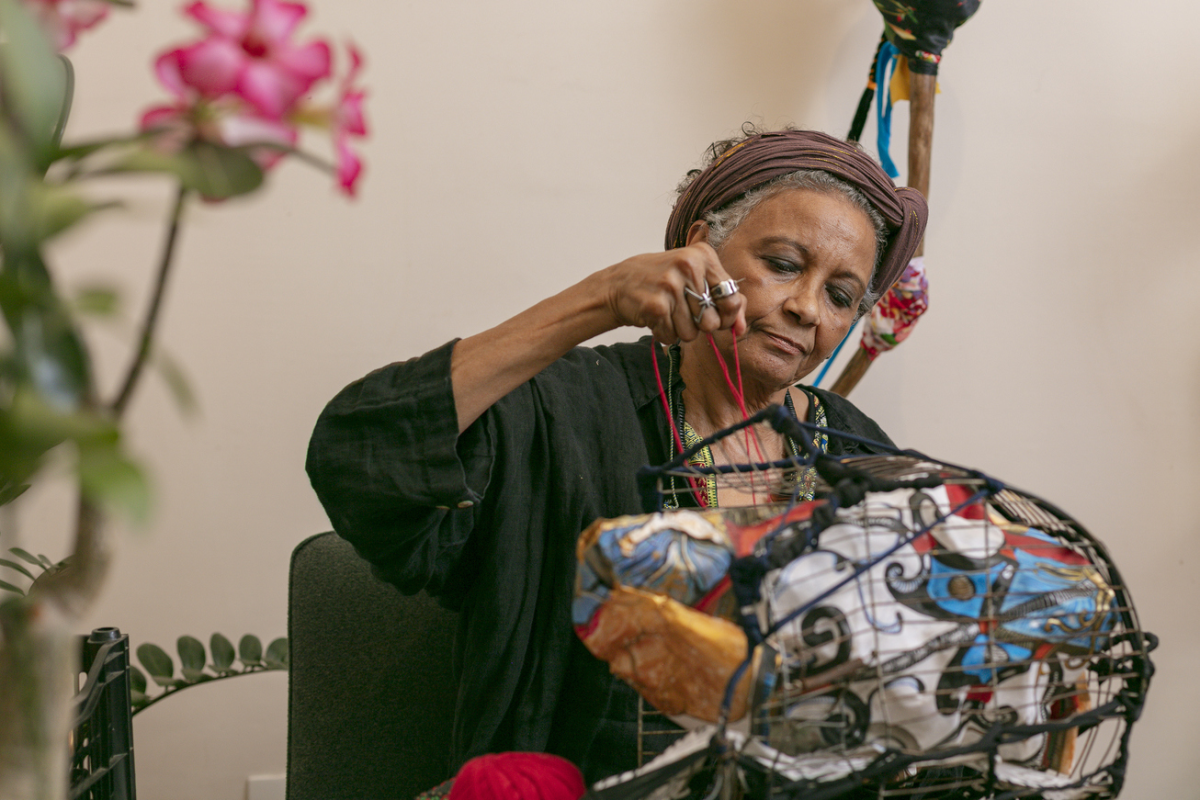
In Art and Foundation, a high school art course, students explored the work of Brazilian artist Sonia Gomes. Throughout the unit, students took a deep dive into her importance within Brazilian culture, studying both her artistic techniques and the meanings behind her work. Inspired by Sonia’s use of textiles, layering, and recycled materials, students created their own artworks based on her style. Students participating in this year’s SAAC Visual Arts Festival also explored her work in collaboration with other schools.
Sonia Gomes, born in Caetanópolis, Minas Gerais in 1948, is a contemporary Brazilian artist who now lives and works in São Paulo. She is known for her sculptures that combine sewing, embroidery, and recycled materials. However, Sonia was not always an artist. In the 1990s, she left behind her career as a lawyer to fully dedicate herself to art. She studied at Escola Guignard at the Universidade do Estado de Minas Gerais (UEMG) from 1995 to 1997, where she began experimenting with textiles, found objects, stitching, and assemblage materials that would later become central to her work.
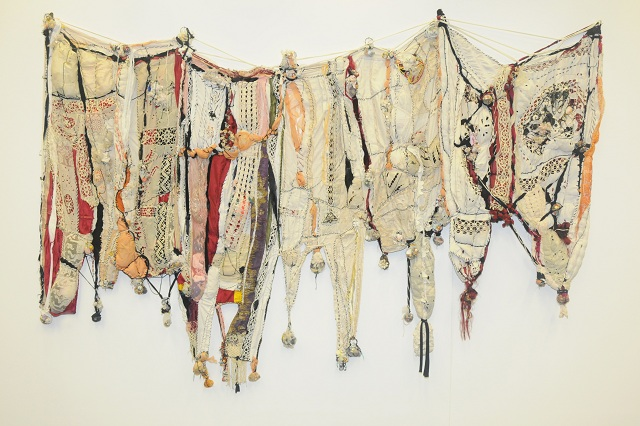
Sonia has often spoken about how her maternal grandmother influenced her artistic journey, introducing her to craft traditions, handmade practices, and ritual. These early experiences shaped her interest in textiles, memory, and transformation, themes that continue to appear throughout her work today.
Her art reflects Brazilian culture in many ways. The tied, layered, and woven materials in her sculptures can evoke Afro-Brazilian traditions, spirituality, ancestry, and inherited forms of knowledge passed down through generations. Her use of sewing, embroidery, and fabric also values forms of domestic and traditionally female labor that are often overlooked. Because Sonia frequently works with recycled materials, many of her pieces carry traces of people’s histories and experiences, making culture physically present within the artwork itself.
Over the years, Sonia Gomes has exhibited her work across Brazil in institutions such as the Museu de Arte de São Paulo Assis Chateaubriand (MASP), the Museu de Arte Contemporânea de Niterói, the Instituto Tomie Ohtake, the Museu da Inconfidência, and the Museu de Arte Contemporânea da Bahia. Her exhibitions have helped establish her as one of the most recognized contemporary women artists in Brazil today.
Through studying Sonia Gomes’ work, students were able to explore how art can preserve memory, reflect cultural identity, and transform everyday materials into something meaningful and personal.