
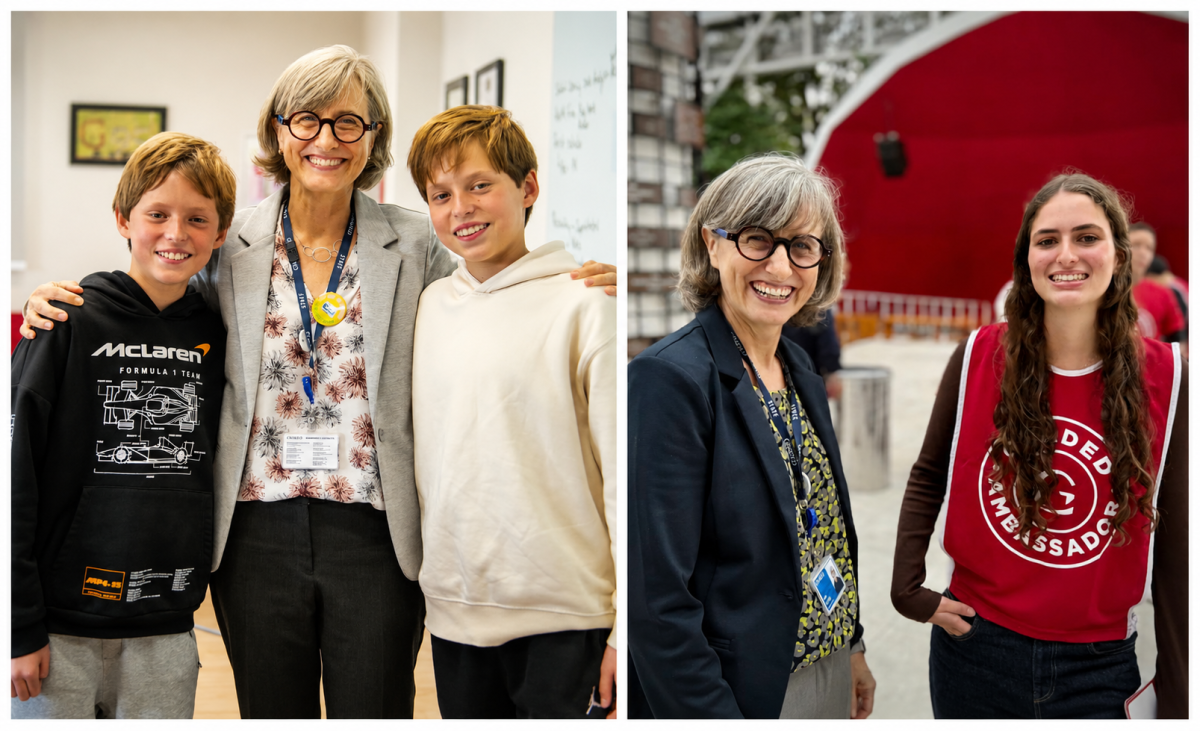
In April of 2025, The Talon interviewed incoming Graded superintendent Jane McGee on her leadership philosophy, and her hopes for the years ahead. One year later, Ms. McGee sat down with Editor-in-Chief Sebastian Nosenzo for another exclusive interview, on the development of her goals and what she has learned from a year of listening, leading, and getting to know the Graded community.
In the following Q&A, Ms. McGee reflects on the initiatives shaping life behind the scenes at Graded, her vision for a school united by a common mission, and what it has been like to call São Paulo home.
The following transcript has been lightly edited for clarity.
Sebastian: My first question for you is: looking back on your first year at Graded, what has surprised you the most about the community, either in a positive or challenging way?
Ms. McGee: Ooh, that’s a good one. I think it’s the same thing that attracted me to Graded: a strong sense of community. People are very passionate about Graded. There’s a really strong alumni community, a really strong parent community, and a really strong student, faculty, and staff community — and it is really what the school is most proud of. I think how we then define what a “sense of community” means looks very different across the different stakeholder groups, and then across different people within those stakeholder groups. So, for example, I don’t think every parent, every student, or every teacher has the same experience at Graded around this concept of community. I feel like it’s probably a natural kind of dilemma or polarity to have in a school, and I think that polarity will be interesting to unpack — but it’s also a fun challenge to unpack, because people are on board. I think the community fundamentally loves being at Graded, and they’re really proud that their children go here. The children love Graded; they really like the experience they have. And 95% of that is going really, really well. But there are some things that we need to get better at. Those revolve around making sure that everyone feels like they belong — so regardless of role, regardless of longevity at Graded, regardless of learning styles and learning needs — how do we make sure all of them feel that they’re a valued member of the community in a more intentional way? So it’s not that they are not valued now, I don’t think. I think that in some situations, we’re not being as intentional as we can be about making that connection and ensuring everyone belongs.
Sebastian: Right. So, to shift focus a bit — what moment this year captures what Graded is as a school for you?
Ms. McGee: There’s been a lot of them. I would say any time I’m with students. When I’m in the cafeteria with a group of kids having a conversation and they’re sharing with me what they’re working on in class, what they’re really proud of, what they’re doing across their studies and across the co-curricular program — it keeps reminding us why we’re here. And I think everyone’s on board with supporting that experience for our students. I think there have been a number of moments going back to the fall — the first semester — and being here for the Thanksgiving event. I see our parent group organizing these phenomenal events to bring everyone together. And at those events, if you ever just — I don’t know if you do this — if you ever try to take yourself out of the moment and sit somewhere and just people-watch at a Graded event, you see all those interactions. You’ll see a really young child greeting a parent that they know from both inside and outside Graded, and you’ll see students greeting — this is my favorite thing, because it doesn’t happen everywhere — you’ll see a high school student going up to another parent. Like, they’re kind of walking by, engrossed in something with their friends, and they see somebody at the corner, and they’ll turn and walk up and say, “Oh, how are you doing, so-and-so?” It’s such a sign of respect and connection within the community. Events like that are really unique and important to watch. But it’s really just moments: pull yourself aside and watch, don’t get involved in it, don’t talk, and just watch — and you really see people connecting and doing really cool things.
Sebastian: All right. So let’s talk a little bit about you. When you arrived, you likely had a vision for your first year. In what ways did reality align with, or diverge from, that vision?
Ms. McGee: I think the first part for me was really trying to get to know the community. And to really understand what they care about, what they’re passionate about, what their concerns about the school are. And then, from a leadership perspective, how is my team functioning to move the school forward and to make change happen for the students? And so I feel like I’ve made those connections with different people in the community. And through making those connections and opening up opportunities for dialogue, there’s more awareness about what we’re doing really well at Graded and what are some of the things we need to get better at as we move forward. I think the parents know that I know what their concerns are, and next year we’ll be setting the stage for how we plan to work with them. I think the faculty knows where we need to get better. And I’m hoping — and I think we’re not quite there yet, but we’ll get there — we’re still working on finding ways to give students a bigger voice about the right things. We have lots of student agency here and lots of leadership, but I still think the students feel that they’re not brought into the conversation at the right time about the right things. So it’s almost like we’re acknowledging that and starting to set the systems and structures up as we head into the next school year.
Sebastian: And what has been the most difficult decision you’ve had to make this year, and how did you approach it?
Ms. McGee: The cell phones — no, just kidding. The most difficult decision — I think some of the most difficult decisions have come around health and safety. We have a very safe campus — it’s kind of like Fort Knox, I always say. It’s very well protected because of where we’re located in the city. When I first got here, this was almost happenstance; I don’t think it would have taken me as long to unpack it otherwise. But one of the things we noticed very early on was when we went for child safeguarding training. We have a very safe school, because people who don’t want to work with kids, for the most part, don’t work here. But what we found in that first session was that some of the systems and instructions were really scattered. And it was almost an easy decision, because other new teachers at Graded and counselors were seeing the same gaps that I was seeing. So what we decided to do was: after we had the training, I just brought the leadership team together and said, “I don’t know why we are where we are as a school, but that doesn’t matter to me. I just think this is an area that we need to focus on immediately.” So someone on the leadership team volunteered to run a task force. This task force met every two weeks for all of the first semester, with very clear guidelines, and really all they were doing was finding out exactly what we do and what we do well, where there are gaps against international standards in this area, and how we would move forward with fixing them. So they revamped an entire handbook and a whole set of new processes, and then we rolled it out in January. We haven’t even rolled it out to the parent community yet — we just rolled it out internally, because we knew we were going to have some hiccups. And what we’re seeing right now is that, because it’s identified systemic breakdowns — where systems have broken down in the past — we’re kind of in a perfect storm. The kids now have stronger relationships with the counselors, so when they see something that doesn’t feel quite right, or has hurt them in some way, they’re reporting it and it’s being dealt with right away. And then there’s a feedback loop, so they know it’s being taken care of. So that inadvertently built — it’s building — trust about something that’s not actually a big problem. We need to have the process in place, but it’s not a big problem in the sense that we don’t have children who are being maltreated. But by having the process, we’re now building trust that’s going to lead into other things — between children and adults, and adult to adult. So it’s been good. And I didn’t really do it — my team did it!
Sebastian: Well, that question was about the challenges. My next question was about one initiative or change this year that you’re especially proud of — is there anything else you’d like to highlight?
Ms. McGee: I think for my part, it’s an interesting conversation, because my job is really to empower my team. One of the things I’m really proud of is building up a new system. At Graded, we have the faculty. And our staff — what we refer to as the Foundations of Excellence (FOE) team — is everyone who doesn’t teach. And that team didn’t really have a sub-leadership team. There’s a lot of jargon — we have an academic core team, which is all the principals. And now we have what we call the FOE core team. That group just started meeting after Winter Break, coming together to talk about things that cross-pollinate their areas, and for professional development for our staff — and we’re incorporating all of that into our new calendar. That group of people have now been trained in child safeguarding. When I do a faculty meeting, I also do a Foundations of Excellence meeting. The idea is to really have a strong sense of community and to ensure that they feel like they play a significant role in the lives of students — because even if they’re not the person in the classroom, they’re still a really important part of the school. I think breaking down that wall has been really, really important, and it’s going to continue into next year.
Sebastian: Okay, and just for our readers — who is an example of a role that would be part of this?
Ms. McGee: So the Foundations of Excellence — it would be everyone who works in marketing and communications, everyone who works in philanthropy, the entire kitchen staff, the entire security team, the entire maintenance team, the technology team, the student growth and performance team. It’s everybody who’s not teaching. And then all of the secretaries — all of the assistants — would fall under them as well.
Sebastian: Great.
Ms. McGee: So that’s why they’re often called support staff — because they’re really the foundation that allows teachers to do their job with students in the classroom.
Sebastian: All right, that’s great. Because I think, as superintendent, much of your work is not directly seen by students, right? It’s not something that we interact with on a daily basis, so it’s very nice to share something that — even if it went unnoticed by most students for now — is something you’re proud of. And that sounds great.
Ms. McGee: It kind of goes back to your first question around the sense of community. One of the things I shared with the teachers and with the parents — during my learning tours when I first came here — was that I asked people to comment on the values, and they talked a lot about the respect people have for one another. They said that was a positive about Graded — and then they said it was also a negative part of Graded, because it depended on who you were and what you did. So I’m like, it’s a perfect polarity: in general, we’re kind and respectful, but we could get better. We’re not always as good as we could be.
Sebastian: That’s a nice way to think about it. So, what is something that students have taught you this year that you didn’t expect to learn?
Ms. McGee: I think I wasn’t expecting them to really know so much about who they are. They really know who they are within their classes, especially at the high school level. They know the strengths of their class. They know the cliques of their class. They know how those groups engage. And they really know what they want to get involved in, and why. I don’t think it really surprised me necessarily — all students; they want a voice, they want to be engaged. But sometimes students will say, “Oh, we all get along,” or, “We don’t ever…” and they kind of generalize the whole school. What I found is that the kids here are really able to take a step back and say, “Actually, you know, we get along when we have to, but we’re not friends” — they’re just really able to articulate what they see as their characteristics, their attributes. And that’s helpful, because if they’re open and honest, then you can work with them around the things you want to change.
Sebastian: All right, so now moving on to some more fun questions about your first year here in Brazil. What is a very Brazil moment that you’ve experienced this year that made you think, “Oh, I live here now”? Or, what was a big cultural surprise for you when you moved to São Paulo?
Ms. McGee: I would say it’s always around language. I’ll realize I’ve tried to communicate with someone in a shop, and whatever I’ve said, they just kind of look at me really strangely — and then I’ll go back and look at it and I’ve said completely the opposite of what I wanted. So most of it’s around language. I’ve been surprised by that. And I would say — I still remember this — I was in a grocery store way back at the beginning. They ask a lot of questions at the grocery store in Brazil, and I knew what some of them were by that point. And then she just kept going, and I’m like, “Okay, she hasn’t asked me for the parking ticket — she hasn’t asked me enough of these things.” And then finally she’s like… and she started to mime everything. So once she mimed about the parking ticket — which is what she had been asking about — she mimed “do I need a bag?” This cashier was miming everything for the ignorant foreigner who couldn’t speak any Portuguese at that point. So I think that I’ve been surprised at how helpful Brazilians are. Anywhere else — many other places I’ve lived — when you attempt to speak the language, or you don’t know it, they just kind of blow you off. Here they just bend over backwards to help you out and to ensure you get what you need. Or, if it’s really important and I can’t communicate, they’ll find someone who can. It’s all about relationships here, right?
Sebastian: I like that, I think that’s something very unique.
Ms. McGee: It is very unique, for sure.
Sebastian: And have you been able to pick up a little bit of Portuguese?
Ms. McGee: A little bit — I’m on Duolingo Day 300. I was in the hallway the other day, and it’s great: there’s Grade 5 writing outside one of the Portuguese classes. I went through — I’m not going to say I spoke it; I don’t want to use the term “fluent,” that’s for sure — but I could read some of the kids’ writing. So I can grasp it when I read it, but I’m not doing very well at the listening or the speaking, and I think I’m just too embarrassed. I said to the staff, actually, on a professional learning day: “You need to know that this is just an area of vulnerability for me. I am so embarrassed that I don’t speak enough of it to have a conversation with you.” And that’s part of building community — you need to know it drives me crazy, but it’s hard.
Sebastian: Well, I think it’ll come with time. I speak Portuguese — also with water polo, all my teammates are Brazilian.
Ms. McGee: Oh, wow.
Sebastian: In fact, when I went to a camp in the US, I had no idea what they were saying in English, because all the terminology — like, “make the hook here” — I was like, what is that?
Ms. McGee: That’s awesome. Yeah — and you think in Portuguese when you play, right?
Sebastian: Yeah! All right, so is there a place, food, or activity that has quietly become part of your life here that was different from before?
Ms. McGee: I would say what’s different is it feels like we’re on a different kind of cycle of things. I find the season-switching quite difficult — I keep thinking we’re going to get warmer now, and then the seasons go the other way. And then for us, we have our go-to places around here where we go for a cup of coffee or something like that. But really, I feel like we’re still in that — and it takes a long time — we’re still in that exploring stage. We’re really trying to make sure that if we go out to a restaurant, we try a new one. It took us a while to get into it, but we’ve tried to take advantage of even just the apartment complex, trying new foods downtown, trying to get over the river, as we say, more frequently, and that’s been a goal for us. I really enjoyed it when we came back early after Christmas and took some time to get to know the subway and go downtown to the center and see some of the sights in Brazil. When we get a chance, we go to exhibitions at the museums and things like that.
Sebastian: Oh, that’s very nice! So, is there something about this graduating class that feels different from other graduating classes you’ve seen in your career?
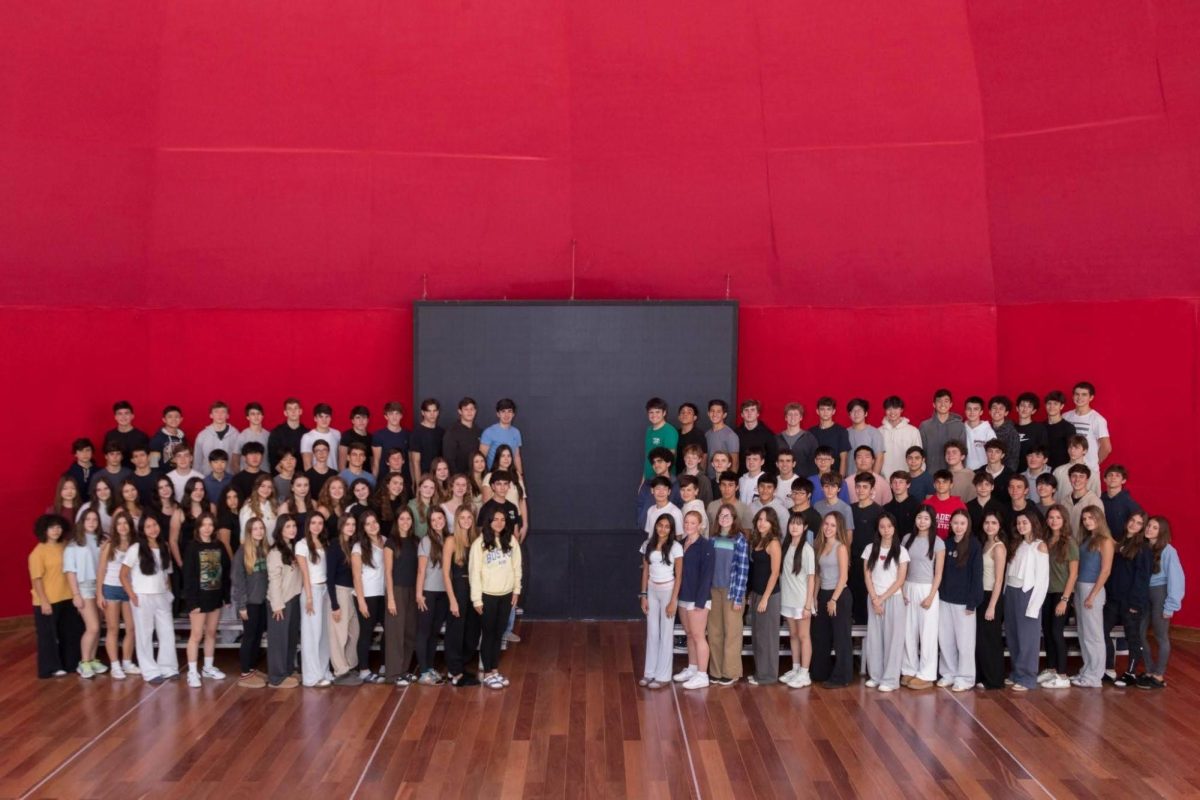
Ms. McGee: When I talk to the current seniors, I feel like they’re a very cohesive class. And that can change depending on the class of students — there are typically events that bring a class together — and I don’t really know the last three years leading up to this. But there’s a real camaraderie in the class. And although there are different groups of friends, people are not completely divided — they have good relationships across groups. They also seem to really care about doing well in school, and they’re very passionate about the things they choose to get involved in. And I’m still seeing that passion — which is notable, because as kids get closer to the end of the year, some of that passion wanes and you’re really watching whether they should be continuing in certain leadership roles. But I’m seeing them be really proud of the roles they’ve taken on and the work they’re doing. And that’s often very unique to different classes — classes take on different personalities. So it’s good to see that you’ve all come together for their senior year.
Sebastian: And I think — yeah, like you said — everybody’s very proud of what they’ve accomplished, and they want to see it through. Is there anything that Graded teachers have taught you this year that you did not expect to learn as a school leader?
Ms. McGee: I think they’ve taught me about relationships. I mean, I think you kind of know this, but I think it’s at a deeper level here. The Graded teachers — like the rest of the community — are really, really passionate about being at Graded, and they’re really proud that they get to work with our community. I was expecting that to some extent, but because such a large number of our teachers have really been at Graded for almost their whole career — this is home. This is their professional experience, and they’re connected to the students, and they’re connected to the families of the students. And I haven’t been at a school that has that number of long-term employees before. And I would also say I haven’t been at a school before that has the number of families who have been here for such a long time. Their stories are amazing, right? And so I think that’s a really unique part of the history and of who the school has become over the years. That is really unique, and the teachers are a part of that. I’ve met people at the alumni reunion who were Graded graduates, but whose mother had worked here, whose father had worked here — and it’s just really interesting to see and hear the stories of what not only the school was like then, but what Brazil was like at that point in time. So that’s really fascinating.
Sebastian: Yes, that’s very unique. I think this is a question similar to one I asked when you first came here: what is one thing you wish more students understood about your role as superintendent?
Ms. McGee: Oh, it’s a hard one. I think sometimes — almost like what you were saying earlier — it’s seen as purely the head of the academic side of the school, which it certainly is, because that’s our core business and why we’re here. But I think sometimes they don’t understand that it’s all these other components.
Sebastian: Yes.
Ms. McGee: And it’s really working with all of those different components. And I think it’s just a missed opportunity for kids sometimes, because everything’s connected somehow. So a student might believe you should just do this, and it’s like, “Well, if I do that, then I can’t do that, and that, and that.” So that balancing piece is, I think, just as interesting. I don’t think a lot of people really understand it. Sometimes I’ll say to my family on the phone, “Today I had a conversation about child safeguarding. Then I had a conversation about a busing incident. Then I had a conversation about how we’re going to work on report cards for next year. Then I had a conversation with a student in the hallway about whether they’re ready for their IB exams.” The breadth of different things, when you’re working with so many people, is what keeps it really, really interesting and why it’s a great profession to be part of. It’s not always easy, but any time you’re spending time with students. It’s like, “Oh, that’s why we’re here. This is why we do what we do.” You’re watching kids learning and growing and building connections — and that’s really neat to watch.
Sebastian: Well, my last question for you is: when you think about the years ahead at Graded, what is one thing you hope people will say changed because you were here?
Ms. McGee: I would like it to be said that who we say we are as a school — our mission, vision, and values — is something that everybody in the school speaks about in the same way. And that everything we’re doing can be connected to that. So if we make a decision about — pick the most mundane thing — if we make a decision about school trips, or about the start of the school day, people understand that it’s connected to our mission, vision, and values because it’s better for kids and their learning. So that would be the dream: every decision focused on students. And I think we do that, but even more so — that we’ve made a decision because we believe it’s best for children. And if we can’t say that, should we even be making that decision? And is it aligned with our mission, vision, and values at the school? Because that’s our promise: we say we do this — and are we doing it?
Sebastian: All right. Thank you so much.